The Whale: Norway’s Remarkable New Museum Above the Arctic Circle
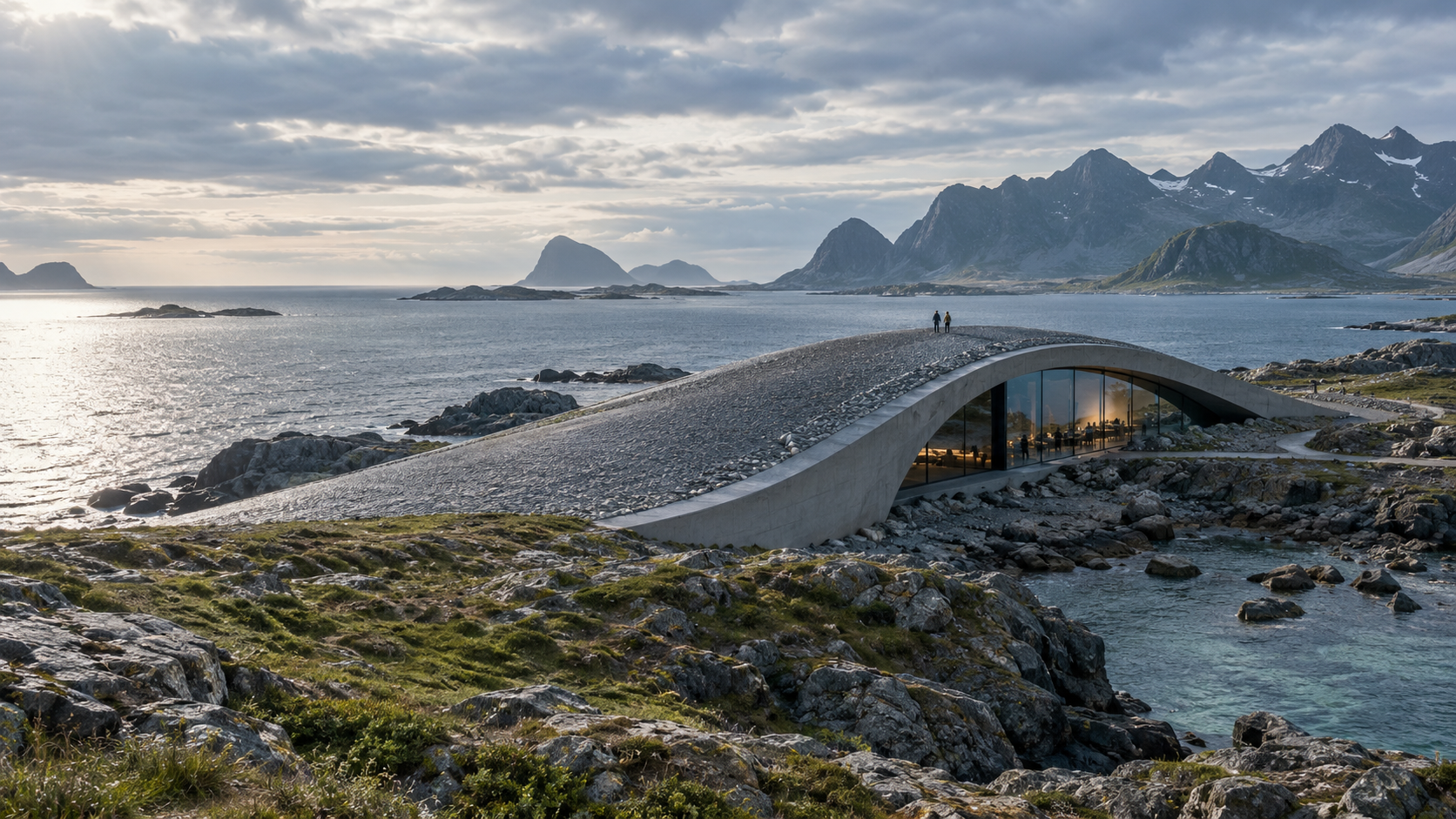
On the northern tip of Andøya island in Norway, about 190 miles above the Arctic Circle, a new museum is rising from the rocky coastline. Called The Whale, it looks less like a traditional building and more like a whale gently breaking through the surface of the sea.
And honestly, I cannot imagine a more beautiful setting for it.
A Museum Designed Around the Landscape
The Whale was designed by Danish architecture studio Dorte Mandrup, known for creating buildings that respond to the landscapes around them.
Its sweeping concrete roof curves gently upward from the shoreline, echoing the shape of a whale’s back emerging from the water. Stones gathered from the surrounding area will cover the roof, helping the museum blend into the rugged coastline rather than compete with it.
The roof will also become part of the experience. Visitors will be able to walk across it and look out over the Norwegian Sea, the mountains of Andøya, and the small islands stretching across the horizon.
It feels like the kind of place where you would want to slow down, breathe in the cold ocean air, and stay awhile.
Why Andenes?
The location of The Whale is an important part of its story.
The waters surrounding Andenes are considered one of the world’s most reliable places for whale watching. A deep submarine canyon lies just offshore, creating an unusually rich feeding area for marine life.
Sperm whales can be found here throughout the year, along with humpback whales, orcas, minke whales, and pilot whales.
Visitors will not simply learn about whales inside the museum. They will be standing beside the very ocean where these incredible animals live.
Science, Art, and Storytelling
Inside The Whale, science, art, immersive sound, and storytelling will come together to explore the lives of whales and the ecosystems that support them.
The museum will also examine the long and often complicated relationship between people and the sea. For generations, coastal communities have depended on these waters for food, work, transportation, and survival. The exhibits will explore that history while encouraging visitors to think about the future of our oceans.
Outdoor paths and gathering spaces will extend the experience beyond the museum walls, drawing visitors directly into the coastal environment the museum celebrates.
This is what makes The Whale so intriguing to me. It is not simply a building filled with exhibits. The architecture, landscape, wildlife, and stories are all part of the experience.
A New Reason to Visit Arctic Norway
The Whale is scheduled to open on June 4, 2027, giving travelers another wonderful reason to explore northern Norway.
A visit could include whale watching from Andenes, hiking along the coast, driving through Andøya’s dramatic landscapes, and experiencing the midnight sun during the summer months. Depending on the season, travelers may also have the chance to see the northern lights dancing above the island.
This is definitely going on my travel wish list.
There is something unforgettable about a museum that does not simply tell you about a place but allows you to experience it—with the ocean below, mountains in the distance, whales just offshore, and an incredible curved rooftop beneath your feet.
The Whale sounds wild, remote, thoughtful, and completely worth the journey.